
October 28, 2026 – Huawei’s “τ chip” is stepping out of the shadows.
Outdoor billboards across multiple Chinese cities recently began promoting the Mate 90 series with the line “entire lineup equipped with flagship τ chips,” marking the first time in six years that Huawei’s Kirin-brand silicon has appeared prominently on public advertising screens. The visual contrast has drawn attention online. A side-by-side photo shared by Chinese tech creator Geekerwan shows a 2020 Mate 40 advertisement highlighting the 5nm Kirin 9000 next to a 2026 Mate 90 display announcing the new flagship τ chip family.
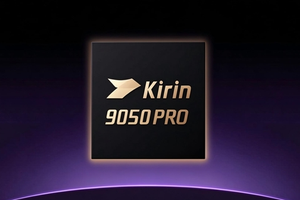
The Mate 90 series launched on October 1, 2026, with a tiered τ-chip lineup. The standard Mate 90 uses the Kirin 9030, the Mate 90 Pro carries the Kirin 9035, the Mate 90 Pro Max is equipped with the Kirin 9050, and the Mate 90 Pro Max Collector’s Edition and Mate 90 RS Ultimate Design feature the Kirin 9050 Pro. Huawei says the entire series benefits from tighter integration across software, hardware, silicon and cloud under HarmonyOS 7.
The most significant technical story sits with the Kirin 9050 Pro. It is the first mass-produced mobile chip to apply Huawei’s “τ law,” or Tao law, which argues that performance can be improved by compressing signal propagation time rather than only shrinking transistor geometry. Instead of laying all logic flat on one plane, the chip stacks logic units vertically and adds high-density interconnects between layers, shortening critical signal paths. Huawei describes the approach as giving signals a faster “elevator” between floors rather than forcing them to travel longer horizontal corridors.
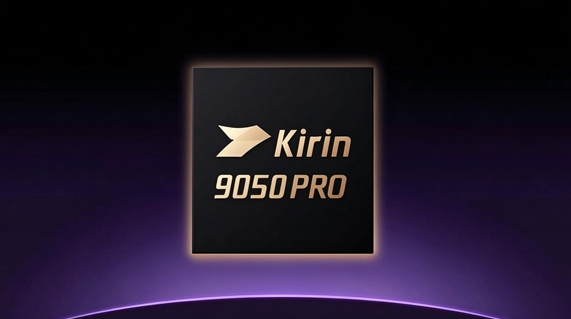
On paper, the Kirin 9050 Pro uses a 9-core, 16-thread LinxiCore CPU, a Maleoon GPU with hardware ray tracing, and a Da Vinci architecture NPU capable of running a 30-billion-parameter MoE model on device. Huawei claims the chip delivers up to a 31 percent whole-device performance gain over the previous generation in its top models, with larger improvements in GPU rendering and AI workloads. The company has also said that, because shorter interconnects reduce capacitance and allow lower operating voltage, key blocks can consume less power at equivalent performance levels.
For Huawei, the billboard campaign is less about a single spec and more about symbolism. The Kirin 9000S return in 2023 was widely interpreted as a signal that Huawei’s chip supply had stabilized; the Mate 90 series now tries to turn that narrative into a broader architectural argument. If τ chips can keep improving without relying solely on advanced lithography, Huawei’s semiconductor path may become less about catching up node by node and more about redefining how performance is extracted from each generation.