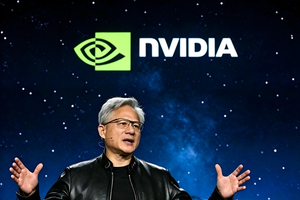






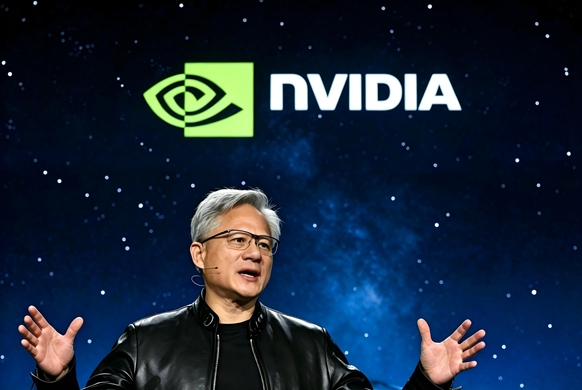
October 23, 2026 – NVIDIA CEO Jensen Huang said he is “open” to cooperating with China’s CXMT (Changxin Memory Technologies), adding that “no country is stronger in manufacturing than China” and that almost every global supply chain already works with Chinese companies at some point.
Speaking during NVIDIA’s GTC conference in Berlin, Huang also pushed back against recent market fears that memory supply will soon become excessive. “The real beauty of memory is that you can always use more,” he said, arguing that AI compute expansion will continue to pull demand for HBM, DDR and LPDDR, and that an oversupply scenario before 2029 is unlikely.
The remarks came after a wave of selling in memory stocks last week, triggered by a Korean media column warning that the semiconductor super-cycle could end and that large new capacity additions might turn the market into a “red ocean” by 2029. Huang’s comments were seen as an attempt to calm those concerns, since memory is a core component of NVIDIA’s AI chips and any sharp price drop could affect suppliers such as SK Hynix, Samsung and Micron.
CXMT is the company behind Huang’s cooperation question. It is China’s leading DRAM producer and has become the world’s fourth-largest DRAM supplier by revenue. Counterpoint Research estimates that CXMT captured 10 percent of global DRAM revenue in the second quarter of 2026, up from 4 percent a year earlier, while Samsung, SK Hynix and Micron remained the top three.
CXMT is one of the few companies with full in-house capabilities across DRAM research, manufacturing and packaging. It has recently moved its fifth-generation DRAM platform into mass production and is preparing to launch new DDR5 RDIMM products for servers by the end of the year. However, it has not yet entered the HBM revenue rankings, where SK Hynix, Samsung and Micron still dominate.
A few days earlier, on October 19, Huang told German Chancellor Friedrich Merz that China is probably the only country today that is deeply rooted in both manufacturing and computer science, and can operate comfortably across the two. His latest comments reinforce that view: even as trade and technology restrictions remain in place, China’s manufacturing scale and growing memory capacity make it difficult for global AI supply chains to ignore.