




August 29, 2026 – Huawei has officially unveiled the exterior design of its next-generation Mate XT 2 foldable smartphone, revealing a significant structural overhaul. Departing from the previous Z-shaped folding mechanism, the new device adopts a U-shaped tri-fold design.
Official images indicate that the new design bears a resemblance to Samsung’s G-shaped foldable, albeit with a slightly different folding sequence. This U-shaped tri-fold configuration substantially enhances reliability by completely enclosing the flexible inner screen within the device’s body when folded. This design effectively minimizes the risk of screen damage, a crucial improvement considering that the replacement screen for the previous Mate XTs cost 4,999 RMB, nearly the price of a flagship smartphone.
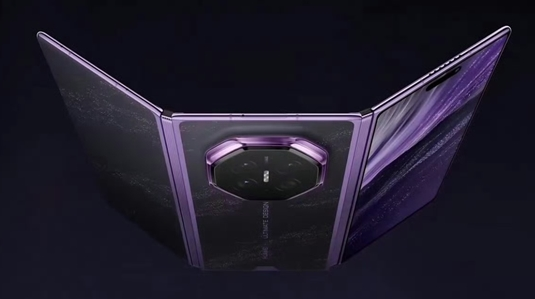
However, it is worth noting that this new design naturally offers fewer usage variations than the Z-shaped counterpart. While the previous Mate XT series supported three distinct form factors (single-screen, dual-screen, and tri-screen), the new U-shaped design represents a strategic product trade-off.
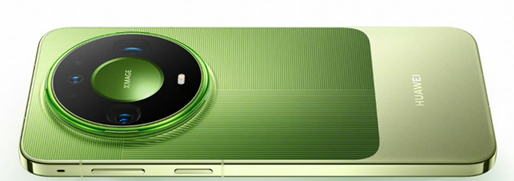
Another notable feature of the Mate XT 2 is its newly added external screen. The front camera maintains the “pill-shaped” cutout typical of Huawei’s traditional flagship smartphones and is expected to support 3D facial recognition, significantly improving security, recognition speed, and enabling facial payment capabilities. The rear camera module retains a similar octagonal design to its predecessor, presenting a bold and premium aesthetic.
In terms of performance, the Mate XT 2 is expected to be powered by the Kirin 9030S chip, the same processor slated for the concurrently launching Pura X View. The Kirin 9030S, currently Huawei’s mainstream flagship chip, features a CPU architecture comprising one ultra-large core at 2.69GHz, three large cores at 2.15GHz, and four medium cores at 1.62GHz, paired with a Maleoon 935F GPU running at 933MHz with 3 CUs.
Additionally, the new device will be the first to debut HarmonyOS 7. The ultra-smooth Ark Engine will integrate a performance large language model for the first time. Leveraging over 2 billion scenario learning data points, the system is expected to deliver a 15% performance boost while keeping the annual performance load increase to 10% or less.