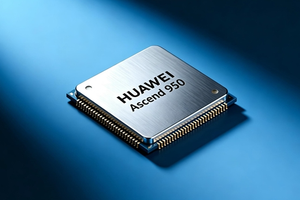



October 8, 2026 – According to recent reports, Huawei management told the media that, based on the data the company can track, Huawei’s AI accelerators have become more popular than Nvidia’s in the Chinese market.
Institutional estimates and figures disclosed at Huawei Connect show that Huawei’s Ascend AI chips now hold about 50 percent of China’s market share, while Nvidia’s share has fallen to around 8 percent. In 2022, Nvidia accounted for roughly 95 percent of the Chinese market, with Ascend at just 3 percent, marking a sharp reversal over four years.
The shift has been driven largely by U.S. export controls. Since 2023, restrictions on high-end AI accelerators have tightened, limiting Chinese cloud providers and research institutions from legally purchasing Nvidia’s top products. Demand, however, has not disappeared, and Ascend has stepped in as the preferred alternative.
Huawei still faces the reality of single-chip limitations. Xu Zhijun, Huawei’s rotating chairman, acknowledged that the bottleneck for individual chips lies in access to advanced process nodes. Huawei’s response is to make up the gap through system-scale architecture.
The company has introduced the Peerium computing architecture and the UnifiedBus high-speed interconnect, which can link up to one million processors as peers. An Atlas 950 SuperPoD based on Peerium, with a scale of 256,000 accelerator cards, is currently being deployed and tested, targeting foundation model training at the 10 trillion to 40 trillion parameter level.
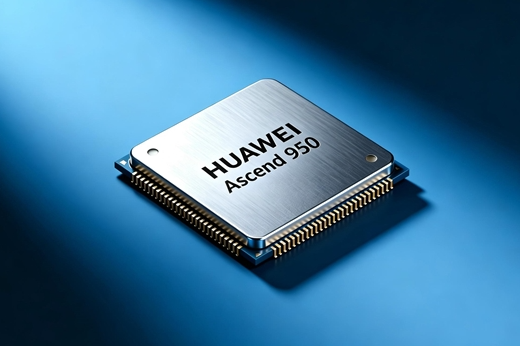
On the product roadmap, the Ascend 950PR for inference entered the market in the first quarter of 2026 and is being supplied in small volumes. The Ascend 950DT training super node remains in testing, with large-scale supply expected by late 2026 or early 2027. Xu expects that from next year, a large number of model training workloads will run on 950DT super nodes.
Supply capacity remains the biggest constraint. Xu stated that the current bottleneck is not demand but Huawei’s ability to deliver: “We supply as much as we can produce.” Because domestic demand far exceeds supply, Huawei has not yet expanded overseas at scale and is only providing limited shipments to a small number of countries.
Huawei also expects global AI infrastructure supply and demand to reach balance around 2029, with the Chinese market potentially taking longer.