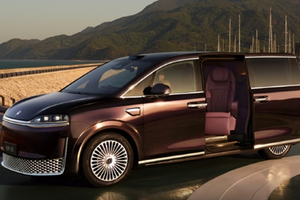
October 29, 2026 – Luxeed’s V9 has passed 30,000 cumulative deliveries, the brand says, setting a new record for the fastest delivery ramp in the 500,000-yuan MPV segment. The milestone comes roughly five months after the flagship MPV launched on May 15, 2026, with prices ranging from 389,800 to 519,800 yuan.
The 30,000th unit rolled off the production line on October 21, giving Luxeed a clearer view of how quickly demand has scaled for a vehicle that sits at the center of Huawei’s Harmony Intelligent Mobility ecosystem. The company says the model has led the above-400,000-yuan MPV segment for four consecutive months, with a 29 percent transaction share in September.
Positioned as a large MPV, the V9 measures 5,359 mm long, 2,009 mm wide and 1,879 mm tall, with a 3,250 mm wheelbase. It is offered in four exterior colors and three interior themes, and comes in four trim levels.
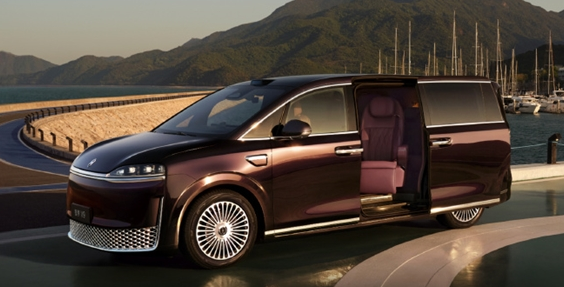
On the sensing side, the V9 carries 38 sensors and is the first MPV to use an 896-line lidar. Paired with Huawei’s Qiankun ADS, the system supports city and highway NCA navigation assistance along with omnidirectional collision avoidance. The chassis is built on the Turing MPV platform and adds ±7-degree rear-wheel steering across the range, producing a 5.35-meter turning radius that is unusually compact for a vehicle of this size.
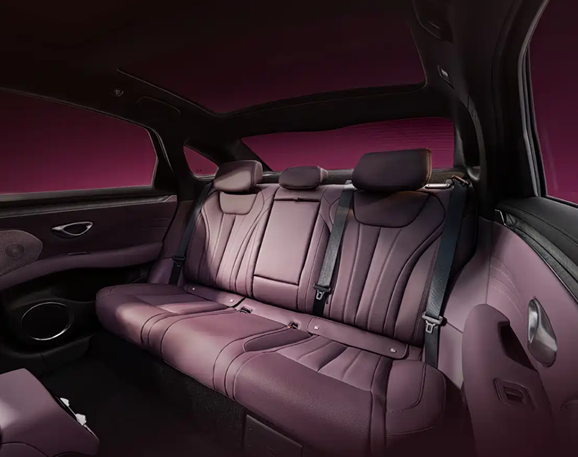
Inside, the cabin uses a triple-screen layout with a 12.3-inch instrument cluster and two 17.2-inch displays, plus a 25-speaker HUAWEI SOUND system. The second row features zero-gravity seats with massage and leg-rest functions, while the vehicle carries 13 airbags, including a full-wrap configuration. The ALPS healthy-cabin system adds active sterilization and air purification.
Power comes from Huawei’s Xuehao intelligent range-extender system and a 53.4 kWh battery. The rear-wheel-drive version delivers up to 305 km of CLTC pure-electric range, while the all-wheel-drive version offers 285 km; both exceed 1,200 km in combined range.
For Huawei’s smart-car business, the V9’s early volume is a useful signal. MPVs are typically high-ASP products with demanding comfort and safety expectations, so reaching 30,000 deliveries quickly suggests the company’s software-defined vehicle stack is finding traction beyond sedans and SUVs.