








August 8, 2026 – China’s action camera market is experiencing an unprecedented boom, driven by a fundamental shift in consumer behavior. According to the latest data from research firm RUNTO, online sales across all channels in the first half of 2026 reached 3.119 million units, generating 8.2 billion RMB in revenue. Both metrics represent a year-on-year surge of over 90%, signaling that these devices are transitioning from niche extreme sports equipment to mainstream tools for everyday content creation.
The primary catalyst for this explosive growth is the proliferation of short-form video platforms and the rise of lightweight user-generated content (UGC). As consumers increasingly document activities like camping, cycling, diving, and urban travel, action cameras have become indispensable companions for the masses. This paradigm shift has triggered a severe “Matthew Effect,” consolidating market power into the hands of two domestic giants: DJI and Insta360.
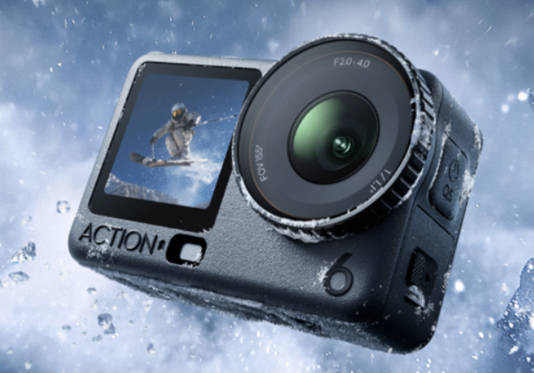
DJI has emerged as the undisputed market leader, capturing a staggering 74% of total sales volume and 80.9% of revenue. Its dominance is anchored by the Osmo Pocket series, which leads the gimbal camera segment, and the Action series, which tops the wide-angle market by leveraging DJI’s advanced drone imaging algorithms and a comprehensive accessory ecosystem. Close behind is Insta360, which secured 15.4% of sales and 17% of revenue. Traditionally dominant in the 360-degree camera niche, Insta360 is now aggressively challenging DJI’s stronghold with the launch of its Luna Ultra gimbal camera, establishing a dual-product strategy.
Conversely, the survival space for competing brands has been drastically compressed. Collectively, all other manufacturers account for merely 10% of sales volume and 2% of revenue. Former industry pioneer GoPro has been increasingly marginalized in the Chinese market; its high-priced HERO13 flagship struggles to compete due to a cumbersome editing workflow and a weaker localized software ecosystem. Similarly, budget brands like SJCAM and AKASO are losing ground, as their low-end offerings fail to meet the sophisticated demands of modern creators who prioritize AI-driven features and seamless integration over basic hardware specifications.