



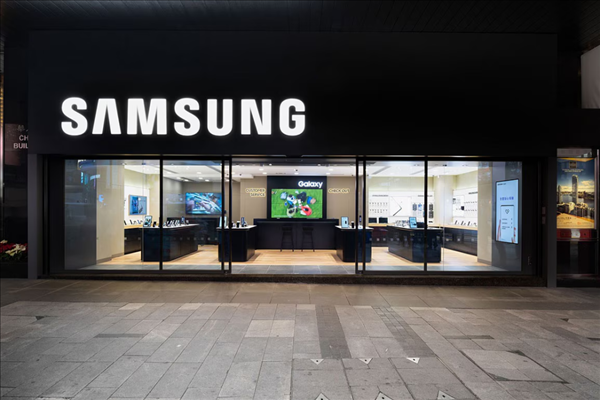
August 8, 2026 – Samsung is executing a massive contraction of its offline retail footprint in China, systematically closing stores that fail to meet a strict monthly sales threshold of 300,000 RMB (approximately $41,500). This ruthless optimization strategy, which has already triggered closures in major cities like Shenzhen, Fuzhou, and Xi’an, underscores the severe financial pressure facing the South Korean tech giant in the world’s most competitive smartphone market.
To put this benchmark into perspective, achieving a 300,000 RMB monthly revenue requires selling roughly 50 flagship devices at an average price of 6,000 RMB, equating to fewer than two units per day. The inability to meet this baseline reflects a dramatic fall from grace for a brand that once commanded the Chinese market. In its prime, Samsung held the top spot with a peak quarterly market share of nearly 22% in 2013. However, according to IDC data, Samsung’s market share in China plummeted to a mere 0.1% in the second quarter of 2026, effectively relegating it to the “Others” category.
The trajectory of Samsung’s decline in China is a textbook case of compounding strategic missteps and fierce local competition. The initial blow came in 2014 when Apple launched the larger-screen iPhone 6, successfully capturing Samsung’s premium demographic. Simultaneously, domestic brands like Xiaomi, Huawei, OPPO, and Vivo launched a coordinated offensive across all price tiers, leveraging aggressive pricing, superior internet marketing, and deeply entrenched offline distribution networks in lower-tier cities.
However, the definitive catalyst for Samsung’s irreversible loss of consumer trust was the 2016 Galaxy Note 7 battery crisis. Despite global safety concerns, Samsung initially excluded the Chinese market from its first recall wave, citing different battery suppliers. When domestic units subsequently caught fire, the company’s delayed response and perceived arrogance permanently alienated Chinese consumers. This reputational damage was further exacerbated by geopolitical tensions surrounding the THAAD missile system deployment in 2017, which halved Samsung’s annual sales in the country.
Despite attempts to regain relevance through localized software partnerships and pioneering foldable devices, Samsung has struggled to compete against domestic rivals that now offer superior hardware specifications, faster charging, and better-adapted ecosystems at lower price points. The retail contraction follows a broader strategic retreat; in May 2026, Samsung announced the complete withdrawal of its home appliance business from China, shifting its national focus toward highly profitable semiconductor and display manufacturing.
Nevertheless, industry experts caution against equating Samsung’s Chinese struggles with a global failure. The company remains the undisputed leader in the worldwide smartphone market, securing the top spot in global shipments during the second quarter of 2026. Ultimately, Samsung has not lost its technological prowess; rather, it has been outmaneuvered in a uniquely hyper-competitive market where the domestic smartphone industry has evolved far beyond the landscape of a decade ago.