


July 31, 2026 – BYD’s Electric K-Car “Racco” Secures Over 5,000 Orders in First Week After Pre-Sale Launch
BYD’s first Japan-focused electric K-Car, the Seagull-inspired “Racco,” has gained strong early momentum, collecting more than 5,000 locked-in deposits within its first week of opening for pre-orders.
The compact EV had already attracted significant attention before its official sales campaign began. During its debut at the Tokyo Motor Show earlier this year, the Racco prototype reportedly received around 30,000 expressions of interest from potential buyers, highlighting the growing demand for affordable electric vehicles in Japan’s urban mobility market.
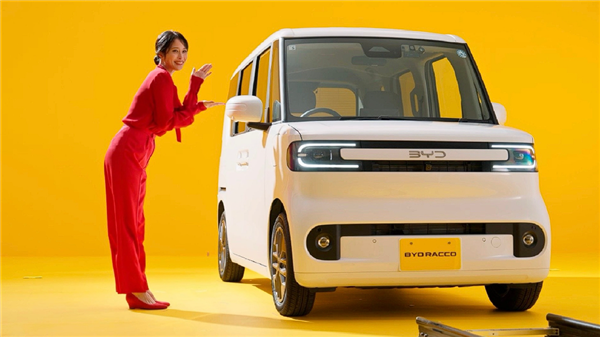
Designed specifically to comply with Japan’s strict kei car regulations, the Racco represents BYD’s first model tailored exclusively for the country’s lightweight vehicle segment. The vehicle starts at 2.145 million yen (approximately RMB 88,700), with government incentives potentially reducing the final purchase cost further.
One of the model’s biggest advantages is its careful adaptation to Japanese consumer needs. Its dimensions fit within the official K-Car category limits, while features such as dual electric sliding doors enhance practicality for city driving and family use. BYD offers two battery range options, providing approximately 210 km and 320 km of driving range respectively. These figures surpass several existing Japanese electric kei car rivals, including the Nissan Sakura, giving the Racco a notable competitive edge.
To strengthen its connection with local consumers and make the Chinese brand feel more familiar to Japanese buyers, BYD selected popular Japanese actress Alice Hirose as the vehicle’s official ambassador. The campaign marks Hirose’s first appearance in an automobile advertisement during her acting career.
The commercial uses a bright yellow visual theme, with Hirose appearing in a vivid red outfit alongside a Racco mascot and everyday household transportation scenarios. Rather than focusing heavily on BYD’s corporate identity, the advertisement emphasizes the vehicle’s interior space, convenience, and practical benefits in an effort to appeal to mainstream Japanese consumers.
However, the campaign also triggered criticism from some nationalist voices online. A number of conservative internet users targeted Hirose, accusing her of supporting a foreign automaker and questioning her choice to participate in the promotion. Some critics even interpreted the red clothing featured in the advertisement as a political symbol, attempting to connect a normal fashion choice with broader national identity debates.
The controversy reflects the wider challenges Chinese electric vehicle manufacturers face when entering established automotive markets. While some consumers remain sensitive to foreign brands, BYD’s early sales performance suggests that product competitiveness, affordability, and practical design are becoming increasingly important factors in purchasing decisions.
As the Racco continues gaining attention in Japan, BYD’s expansion into the kei car segment could become another example of Chinese EV makers pushing deeper into overseas markets through localized products designed around regional preferences.