



October 20, 2026 – Neolix, a Beijing-based maker of autonomous delivery vehicles, has raised nearly $400 million in a Series E round that it says is the largest single investment in China’s self-driving sector this year.
The round was led by BOCI Investment and a national-level AI investment fund, with new participation from Alibaba Group’s AEF NextGen Fund, Monolith Capital, Granite Asia Capital and Temasek-backed Vertex Growth. Existing investors including Stone Venture and Xincheng Capital also took part. The company did not disclose its valuation, but said cumulative funding has now surpassed $1.4 billion, or more than 10 billion yuan.
Neolix plans to use the proceeds to expand its global operations, add more logistics and e-commerce customers, and strengthen its end-to-end autonomous driving models. The company currently operates more than 30,000 L4 delivery robots across over 300 cities in 20 countries, which it describes as the world’s largest autonomous delivery fleet.
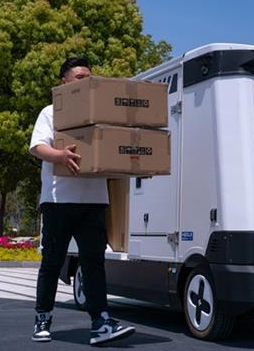
The vehicles are mainly deployed for last-mile parcel delivery, night-time logistics and small-business fulfillment. Neolix has begun running night delivery services in cities such as Shenzhen, where it says operating on quieter roads can cut costs by about 30%. Founder Yu Enyuan said the domestic fleet is expected to grow to 50,000 vehicles this year, with another 100,000 planned for 2027.
Overseas, Neolix has secured a commercial operating license for its RoboVan service in Abu Dhabi and is expanding across the Middle East. It has also set up a European hub in Luxembourg and started testing in Belgium, Portugal and Switzerland, while pushing further into South Korea, Japan, Singapore and Malaysia.
The funding comes as Chinese regulators have moved to support autonomous logistics. Since July, several ministries have issued plans encouraging pilot programs for driverless delivery vehicles and smart logistics equipment. For Neolix, the new capital is intended to deepen its global service network and improve the data loop that connects real-world operations with model training, aiming to raise safety levels and lower lifetime operating costs.