


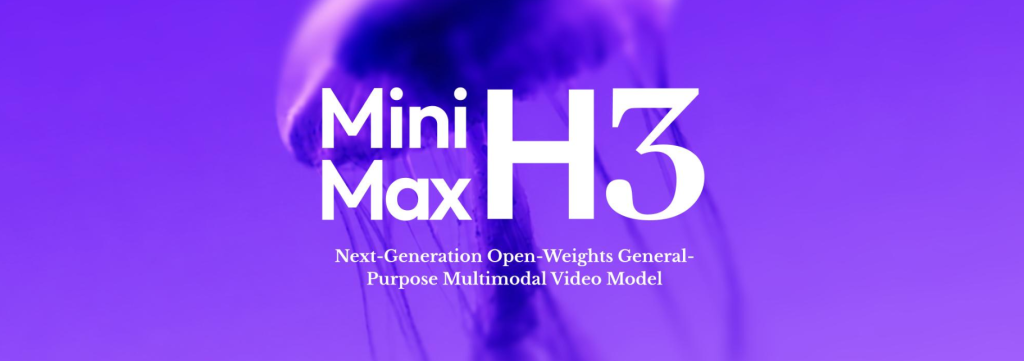
August 4, 2026 – Chinese AI firm MiniMax has sparked a heated debate in the global developer community after releasing its open-source video generation model, MiniMax H3, with an unprecedented geographic restriction.
While the model’s capabilities rival ByteDance’s Seedance, its open-source license explicitly excludes users from the United States, the European Union, the United Kingdom, and South Korea. This move marks a significant departure from the norm for Chinese open-source AI models, which typically offer global accessibility with restrictions limited to commercial use.
The exclusion has drawn sharp criticism from American developers, many of whom have expressed frustration at being unable to even download the model.
In response to the backlash, Ryan Lee, MiniMax’s head of developer relations, clarified the company’s position on the social media platform X. He stated that the regional restriction is a direct consequence of ongoing copyright litigation filed by major Hollywood studios against MiniMax.
The studios, including Disney, Universal Pictures, and Warner Bros. Discovery, have accused MiniMax’s Hailuo AI of using their copyrighted material to train its models without permission and generating content featuring iconic characters from franchises like Marvel and Star Wars. In May, a U.S. court rejected MiniMax’s motion to dismiss the case, allowing the lawsuit to proceed.
Lee emphasized that the restriction is a defensive legal measure rather than a geopolitical statement. He noted that American users are not entirely barred from accessing MiniMax H3; they can apply for a formal license to deploy the model. However, applicants must commit to establishing robust content compliance mechanisms that fully align with U.S. laws and regulatory requirements.
This conditional access shifts the legal burden onto the user, requiring them to assume responsibility for ensuring their use of the model does not infringe on copyrighted material.
The controversy underscores the growing tension between open-source AI development and intellectual property rights in the generative video space. Unlike previous restrictions on Chinese AI models that were often tied to export controls or commercial licensing, MiniMax’s exclusion of specific Western jurisdictions is a direct reaction to U.S. legal action.
The situation highlights a paradoxical outcome: American companies’ aggressive pursuit of copyright claims has inadvertently limited American developers’ access to a cutting-edge AI tool. As the legal battle continues, the case may set a precedent for how open-source AI models navigate international copyright laws and regulatory landscapes.