



July 31, 2026 – Ford Motor’s top leadership is laying out a far more concrete timeline for the long-anticipated U.S. market entry of Chinese automakers, even as Washington moves to tighten existing trade barriers and advance new restrictions targeting Chinese vehicles. During an all-staff gathering held locally on Thursday, CEO Jim Farley told employees the Detroit-based automaker is already rolling out proactive preparations to counter Chinese brands that could make a full-scale push into the U.S. market within the next 5 to 10 years.
Farley and other senior executives clarified during the event’s Q&A session that the more realistic timeline for a meaningful, large-scale Chinese automaker presence in the U.S. is likely closer to the 10-year mark, rather than an imminent near-term launch. This marks a notable shift from Ford’s earlier public warnings about the Chinese auto industry’s growing global footprint, as the company has never before attached such specific, long-range projections to its assessments of Chinese brands’ U.S. ambitions.
The internal discussions at Ford are unfolding against a heated legislative backdrop on Capitol Hill, where the U.S. Senate is pushing to expand existing bans on Chinese vehicle sales, in a bid to block Chinese brands from gaining a foothold in the world’s second-largest and most profit-rich automotive market. Just weeks earlier, Ford Executive Chairman Bill Ford also addressed the competitive threat posed by Chinese automakers, arguing that perpetual exclusion is not a viable long-term strategy. “We cannot keep Chinese automakers out forever,” he noted, emphasizing that Ford must build the capability to outperform its Chinese rivals in the areas where they have already established a strong competitive edge.
Chinese automakers have already secured a solid foothold in markets adjacent to the U.S., making steady gains in market share in Mexico, and have secured approval for limited electric vehicle sales in Canada under a recent bilateral trade deal. Industry analysts widely view the Canadian market, which closely mirrors U.S. consumer preferences and vehicle regulatory standards, as a critical test bed where Chinese brands can refine their product offerings, distribution networks and brand positioning before attempting a full U.S. launch.
Consumer sentiment data also points to growing U.S. buyer interest in Chinese vehicles, driven largely by a persistent gap in the domestic market for affordable, well-equipped electric models – a segment where Chinese manufacturers have already built a strong global reputation. While Ford has not yet faced Chinese automakers in direct head-to-head competition on U.S. soil, the company has already felt the full force of their competitive pressure in overseas markets, where Chinese brands are rapidly capturing larger slices of the European auto market.
To reverse sliding sales in Europe and shore up its global competitiveness, Ford recently announced a landmark joint venture with Chinese automaker Geely. Company leaders framed the partnership as a direct response to the industry-wide pressure from Chinese rivals, noting that the surge of competition is pushing every major global automaker to operate more nimbly, cut unnecessary bloat and innovate faster.
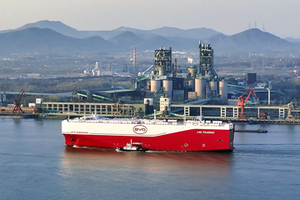
The scale of the Chinese auto industry’s global expansion is underscored by the latest export figures released in July by the China Passenger Car Association. The data shows that Chinese manufacturers shipped 499,000 new energy passenger vehicles in June alone, marking a 152.7% year-over-year jump and a 17.6% rise from the previous month. For the first half of 2026, total new energy passenger vehicle exports hit 2.231 million units, surging 124.3% compared to the same period a year earlier.
Would you like me to adjust the tone to match a more tech-focused, in-depth analysis style, or add more details on Ford’s specific cost-cutting measures tied to this competitive pressure?