May 29, 2026 – At the 4th Future Auto Pioneers Conference held today, Seres Auto Chairman Zhang Zhengping offered his take on the growing rivalry between Huawei’s Qiankun Intelligent Driving platform and Tesla’s Full Self-Driving (FSD) system — and made one thing clear: the market, not executives, should have the final say.
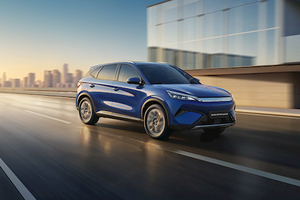
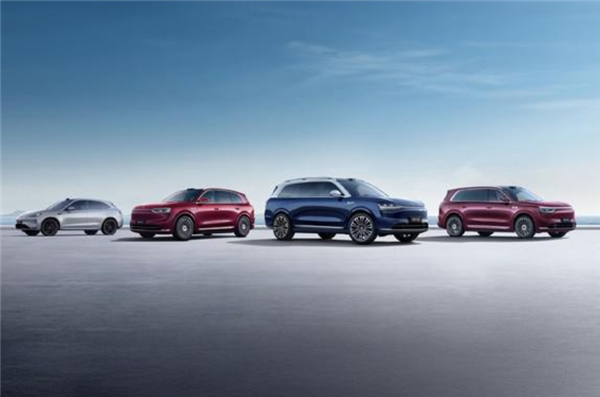
“Which system actually performs better? That’s a question for the market to answer,” Zhang said. He then pointed to the newly launched AITO M9 as proof of Huawei’s hardware-first philosophy. The flagship SUV is equipped with six LiDAR units and a total of 40 intelligent driving sensors, all powered by Huawei’s ADS 5 full-stack autonomous driving system. “In terms of hardware redundancy, we’re no less competitive than FSD,” Zhang asserted.
The two platforms represent fundamentally different bets on how self-driving cars should perceive the world. Tesla’s FSD, especially since the V12 update, has committed entirely to a pure-vision approach — eight cameras feeding into an end-to-end neural network, with no reliance on high-definition maps or external sensors. Tesla’s core argument is straightforward: humans drive primarily with their eyes, so cameras backed by sufficiently powerful AI should be enough.
Huawei’s Qiankun system takes the opposite path. By fusing LiDAR with multiple sensor types, it claims to achieve perception capabilities that extend far beyond human vision — detecting road conditions and environmental details the naked eye simply cannot catch. Zhang described this as going “beyond what human eyes can see,” positioning it as a meaningful safety and stability advantage.
The debate underscores a deeper fault line in the autonomous driving industry: one camp wagering everything on cameras and AI, the other layering in redundant sensors as a safety net. As both systems roll out at scale, real-world performance — not executive claims — will determine the winner.