




April 30, 2026 – Tesla has officially announced that its electric semi-truck, the Semi, has entered a new phase of mass production. This marks a significant milestone, considering it’s been nine years since the vehicle’s debut in 2017 and its initially planned production start in 2019.
In the early days, the delivered Semi trucks were hand-assembled on experimental production lines. However, the current mass-produced models have undergone three years of optimization and upgrades. As a result, the vehicle’s body weight has been reduced by about 1,000 pounds (approximately 453.6 kilograms).
Back in February this year, Tesla unveiled the final configurations of the mass-produced Semi. It comes in two versions: the standard-range and the long-range. The standard-range model is priced at 260,000andoffersarangeof325miles(around523kilometers)underfull−loadconditions.Thelong−rangeversion,pricedat290,000, can travel up to 500 miles (about 805 kilometers) on a single charge.
The Semi is equipped with an 800kW three-motor drive system, providing powerful performance. Even when fully loaded with 37 tons, it can start smoothly. It also supports 1.2-megawatt super-fast charging, allowing it to recharge 60% of its battery in just 30 minutes, perfectly aligning with the legally mandated rest intervals for truck drivers.
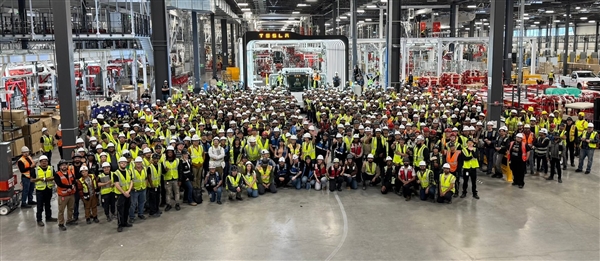
To ensure smooth mass production, Tesla has built a dedicated 1.7 million-square-foot production base next to its Nevada Gigafactory. This facility enables vertical integration of the 4680 battery cells, addressing the supply chain bottlenecks that had previously hindered the project’s progress. The factory is designed to have an annual production capacity of 50,000 units, with an estimated delivery range of 5,000 to 15,000 units in 2026.
The market has responded enthusiastically to the Semi. In California’s “Clean Truck and Bus Incentive Program” alone, there have been 965 applications for the Semi, accounting for over 90% of the total applications and far surpassing those for other brands.
Currently, Tesla has established its first heavy-duty truck supercharging station in California. It plans to set up 66 such stations across 15 states in the US. Additionally, the supporting ecosystem continues to improve, further lowering the entry barriers for logistics companies.