



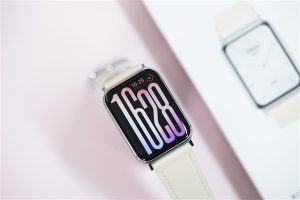




February 28, 2026 – According to the latest data released by Omdia, the global shipments of wearable devices surpassed 200 million units in 2025, marking a 6% year-on-year increase.
The data reveals that Xiaomi has reclaimed the top spot for the first time since 2020, becoming the world’s largest wearable device manufacturer with an 18% market share. Apple follows closely in second place with a 17% share, while Huawei takes third place with 16%. Samsung and Garmin come in fourth and fifth, holding 9% and 5% of the market respectively. Notably, the market is becoming more concentrated, with the top five players dominating the industry. The competition among the top three is particularly fierce, as the gap between them is extremely narrow.

Cynthia Chen, a research manager at Omdia, commented, “The competition in the wearable device market is shifting from pure hardware comparison to ecosystem competition. With less than a 1-percentage-point difference among the top three, competitive advantages hinge on the ability to achieve seamless cross-device collaboration and transform data into monetizable services.”
The report highlights that Xiaomi’s rise is not attributed to a single flagship product but rather to a systematic multi-category layout. Its fitness trackers continue to underpin shipments in the mass market, while entry-level smartwatches equipped with self-developed chips and deeply integrated into the ecosystem are helping Xiaomi enhance its overall value proposition.
Apple maintains its strong position in the high-end market. Leveraging 5G connectivity and advanced health features like blood pressure monitoring, it retains high loyalty among high-value users.
Huawei relies on a comprehensive product lineup to solidify its foundation in the mainstream market. At the same time, it is increasing its investment in professional sports and medical-grade health applications.
The report also points out that AI and subscription services are revolutionizing the competitive landscape of the industry, transforming from supplementary features into core drivers of growth and profitability. Wearable bands are increasingly being optimized for continuous health monitoring. Some manufacturers are even exploring screenless or minimalist screen designs to improve wearing comfort and data continuity.