





August 22, 2026 – During the second-quarter 2026 earnings call, Xiaomi Group President Lu Weibing revealed that the company’s proprietary Xuanjie O1 chip has surpassed one million units in cumulative shipments. More importantly, he confirmed that the next-generation Xuanjie chip is imminent. This milestone signals Xiaomi’s transition from a singular technological breakthrough to a sustainable, continuously iterating product roadmap in the semiconductor sector.
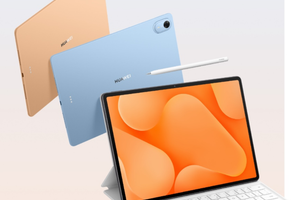
Unveiled in May 2025, the Xuanjie O1 marked Xiaomi’s debut as a manufacturer of flagship 3nm smartphone SoCs. Fabricated on TSMC’s second-generation 3nm process, it integrates approximately 19 billion transistors within a compact 109-square-millimeter die. This achievement positioned Xiaomi as the fourth company globally, joining Apple, Qualcomm, and MediaTek, to successfully develop and release a 3nm mobile processor. Crucially, the O1 moved beyond theoretical benchmarks into mass production, powering devices like the Xiaomi 15S Pro and multiple tablet models. Surpassing the one-million-shipment mark validates Xiaomi’s comprehensive capabilities across chip architecture, system design, and mass-market terminal adaptation.
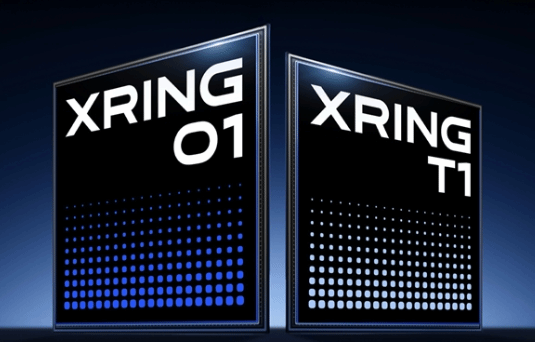
Looking ahead, industry leaks suggest the upcoming chip, potentially named the Xuanjie O3, will continue utilizing TSMC’s 3nm process. The engineering prototype reportedly features a tri-cluster architecture comprising an ultra-large core clocked at 4.05GHz, performance cores at 3.42GHz, and efficiency cores at 3.02GHz, alongside a GPU operating at 1.49GHz. If these specifications hold true, the O3 will be highly competitive with top-tier mobile SoCs from Apple and Qualcomm. Rumors indicate the new chip may debut in Xiaomi’s next-generation foldable flagship, demonstrating its readiness to power premium devices. Furthermore, Xiaomi is expanding the Xuanjie brand beyond smartphones and tablets; the Xuanjie T1, introduced in May 2025, targets smart wearables with an integrated proprietary 4G baseband and eSIM support.
As the ecosystem of AI smartphones, tablets, and smart vehicles expands, the strategic importance of proprietary SoCs continues to grow. By deeply integrating Xuanjie chips with HyperOS, AI large models, and proprietary imaging algorithms, Xiaomi aims to define holistic product experiences rather than merely chasing benchmark scores. The successful commercialization of the O1 serves as a strong first-phase report card, while the upcoming release will determine Xiaomi’s viability as a long-term competitor in the flagship SoC arena. In an era of intensifying global tech competition, mastering core chip technology grants Xiaomi greater supply chain resilience and a robust foundation for sustainable development.