

June 30, 2026 – Elon Musk has officially unveiled that mass-production-ready Tesla Cybercabs have rolled out for engineering trials on public streets within Austin, Texas.
All test units hitting city roads come without a steering wheel, accelerator or brake pedals, eliminating every physical control interface that lets human drivers take over the vehicle. The Texas Department of Transportation has reviewed and validated this control-free layout as fully compliant with local regulations. Musk also shared real-world footage capturing the autonomous shuttles navigating regular urban traffic without manual input.
While each vehicle carries a safety attendant inside to monitor the self-driving system’s performance, these on-board supervisors possess zero ability to manually steer, speed up or slow down the vehicle. Every driving maneuver including acceleration, braking, turning, obstacle evasion and lane changes is handled entirely by the car’s native autonomous software stack.
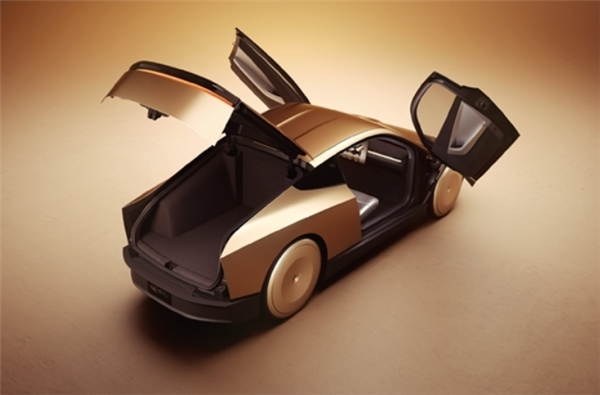
Tesla first debuted the Cybercab concept back in October 2024. It took merely 20 months for the automaker to deploy production-ready, control-less prototypes onto public urban roads, marking a far faster rollout timeline compared to competing robotaxi programs across the mobility industry.
Built exclusively for robotaxi commercial fleets, the Cybercab represents Tesla’s first purpose-built SAE Level 4 autonomous passenger vehicle. Its cabin layout is fully reimagined around shared ride services, featuring a two-seat interior paired with butterfly doors. Traditional side mirrors are removed entirely; instead, the vehicle’s onboard sensor suite delivers full surrounding vision for navigation.
On power and range specifications, the model houses a compact 48kWh battery pack alongside a single front-wheel-drive setup. The curb weight sits at just 1,412 kilograms, with an EPA-rated equivalent driving range of 672 kilometers. Its lightweight frame paired with power-efficient electronic controls supports back-to-back short-distance ride-hailing trips throughout the day. Factory-built wireless inductive charging ranging from 19kW to 25kW enables automated recharging workflows tailored for unmanned fleet operations.
The self-driving hardware suite consists of Tesla’s full HW4.0 sensor array, powered by the updated V14.3.3 end-to-end camera-only FSD algorithm. An array of high-resolution cameras plus 4D millimeter-wave radars deliver full 360-degree environmental awareness. Official safety documentation categorizes the vehicle as an SAE Level 4 autonomous system, meaning it can execute all driving tasks independently within its designated service zone with no human oversight required.