








April 22, 2026 – On April 20, the Japan Meteorological Agency reported that a magnitude 7.7 earthquake struck the waters near eastern Honshu, Japan, with a focal depth of approximately 20 kilometers. This seismic event had a significant impact on several regions that are hubs for the semiconductor industry.
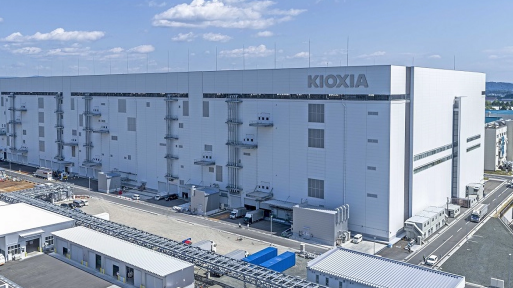
Kioxia, a major Japanese semiconductor manufacturer, issued a statement on the 21st. It clarified that the buildings and facilities at its Kitakami plant remained undamaged, and production at the Kitakami-Sato plant was proceeding as usual without any interruptions.
On the same day (Monday), Tokyo Electron Limited (TEL) also released an announcement stating that both of its factories located near the earthquake’s epicenter were maintaining normal operations.
Meanwhile, Etsuaki Kawada, an honorary professor at Kyoto University in Japan, issued a stern warning. He pointed out that there is a more than 90% probability of a massive earthquake occurring in the Nankai Trough within the next 50 years. If such an event were to take place, it could trigger a catastrophic disaster, potentially even leading to the collapse of Japan’ national system.
In response to these seismic threats, Japan has already initiated a series of multi-layered defense measures. These include establishing an early warning system, carrying out disaster prevention construction, and making emergency preparations. For instance, over a thousand tsunami monitoring stations have been deployed, strict building seismic resistance standards have been implemented, and nationwide disaster prevention drills are regularly conducted.
However, the country’s defense efforts still face severe challenges. Issues such as an aging population and contradictions in resource allocation continue to pose obstacles to the effective implementation of these disaster prevention measures.