



March 30, 2026 – Today, Li Xiang, the CEO of Li Auto, announced some exciting news. The research paper from Li Auto’s Mach 100 chip development team has been accepted by the 2026 ISCA Industry Track. Congratulations to Xie Yan and his team!
This achievement marks a significant recognition from the world’s most authoritative academic review for their exploration of data – flow architecture. The Mach 100 adopts a data – flow architecture, which is a chip architecture specifically designed for AI from the ground up.
Traditional GPGPUs are driven by instructions. In this model, data is constantly shuttled back and forth between computing units and global memory. As the scale increases, bottlenecks become more prominent. In contrast, the data – flow architecture is data – driven. Computing units transmit data directly to each other, resulting in higher execution efficiency and greater effective computing power. Moreover, it is fully programmable. Unlike ASICs where algorithms are fixed, the Mach 100 can evolve along with the development of AI, offering much higher flexibility.
ISCA is one of the most prestigious academic conferences in the field of computer architecture. Since 2020, it has set up an independent Industry Track, which is exclusively for the industrial sector. It requires that the first author and most of the authors be from enterprises, and only a single – digit number of papers are selected each year.
Previously, papers from companies like DeepSeek, Google, Meta, and NVIDIA have been published in the ISCA Industry Track. Li Auto is the first in the automotive industry to achieve this feat.
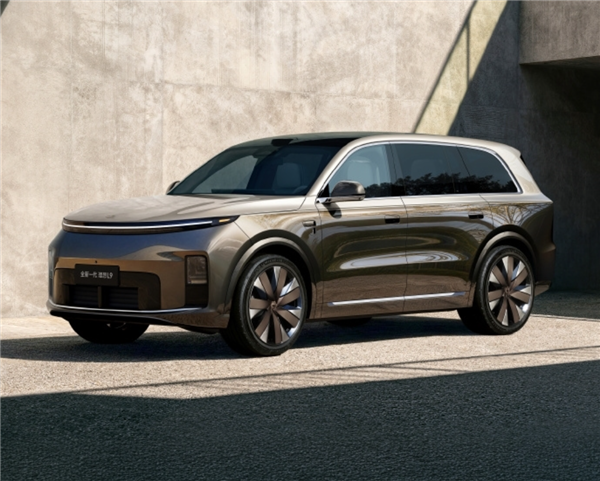
Li Xiang also revealed that the all – new Li Auto L9 will be the first to be equipped with the Mach 100 chip. The Mach 100 is Li Auto’s first self – developed automotive – grade intelligent driving chip, designed for VLA (Vision – Language – Action) large models and embodied intelligence.
It uses a 5nm automotive – grade process and incorporates Chiplet technology to improve yield and expand flexibility. A single chip has a peak computing power of 1280 TOPS. The new Li Auto L9 Livis uses dual – chip collaboration, providing a total computing power of 2560 TOPS.
As the first automotive – grade AI chip in China with a native data – flow architecture, it differs from traditional GPUs driven by instruction streams. It is deeply customized for Li Auto’s self – developed Mind VLA – o1 large model and 3D ViT vision model, reducing data movement and improving computing power utilization.