




Agriculture is changing, but not in the way many people expected a few years ago. It is not just about bigger machines or more sensors. It is about making everything work together in a simple and reliable way. That shift is now becoming clear.
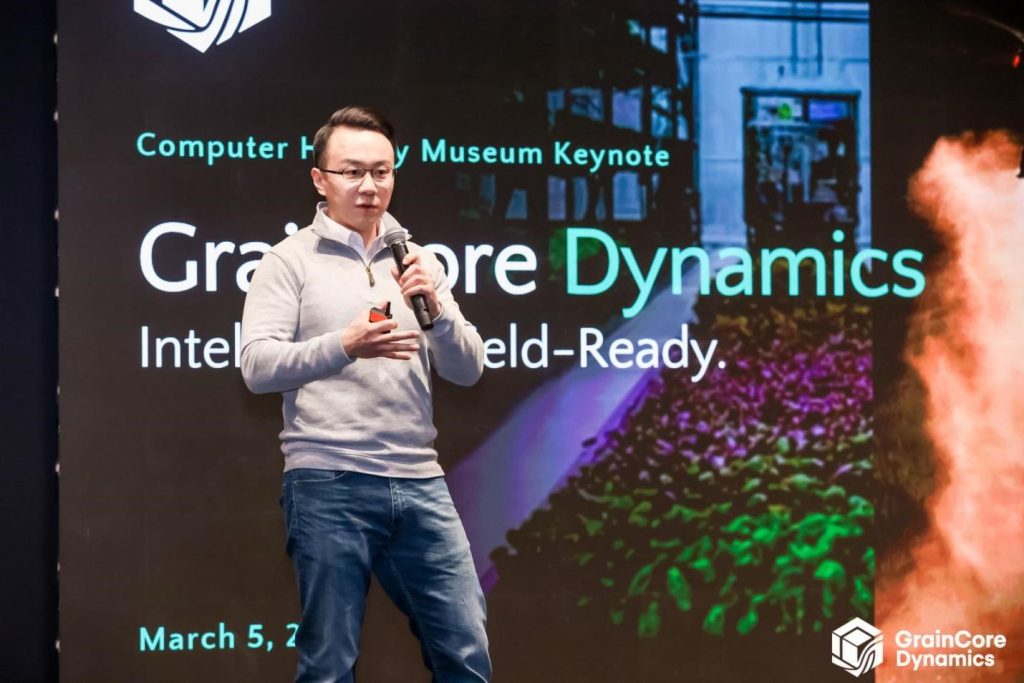
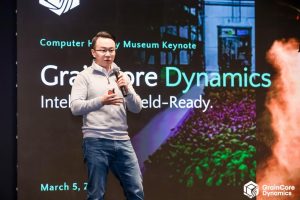
At the Frontier Innovation Summit 2026 in Mountain View, California, GrainCore Dynamics showed what that future could look like. The company did not focus on a single product. It presented a full system that connects field farming and indoor agriculture into one workflow. This matters because farmers today face two pressures at the same time. They need to produce more. They also need to reduce waste and risk.
Over the past month, there has been growing attention on practical AI in agriculture. Across North America, investors and operators are no longer chasing abstract concepts. They are looking for systems that can be deployed, maintained, and scaled without adding complexity. GrainCore’s approach fits this shift.
The company’s ecosystem combines autonomous drones, AI-managed indoor farming, and a shared edge computing layer. Each part solves a real problem. Together, they form something bigger. It is not a flashy vision. It is a grounded attempt to make farming more predictable and efficient.
From an industry point of view, this launch signals a clear trend. Agtech is moving from isolated tools to integrated platforms. And the winners will likely be those who can connect hardware, software, and real farm operations in a seamless way.
1. From Tools to Systems: Why Integration Matters Now
For years, agtech has been full of point solutions. One company builds drones. Another builds sensors. Another focuses on software dashboards. Each product works on its own. But farms do not operate in isolated steps. Everything is connected in daily work.
This is where GrainCore’s system stands out. It links outdoor farming and indoor production through one architecture. That idea is simple, but hard to execute. It requires both hardware capability and software coordination.
At the summit, the company showed how its system handles large-scale farmland and controlled environments at the same time. The P100S drone collects field data and performs variable-rate applications. The indoor plant factory system manages climate and nutrients with AI. The edge-AI layer connects both sides.
This structure reflects a broader shift seen in recent industry discussions. In the past 30 days, several agtech reports in North America have pointed to the same issue. Farmers are overwhelmed by fragmented tools. Integration is becoming more valuable than raw innovation.
GrainCore’s approach addresses this directly. It does not ask farmers to adopt ten different systems. It offers one coordinated platform. That lowers the barrier to adoption. It also improves consistency across operations.
Another important point is reliability. Agriculture is not a test environment. If a system fails during a critical window, the cost is real and immediate. GrainCore emphasizes stable deployment over experimental features. This aligns with current market demand, especially among large-scale operators in the U.S. and Canada.
In simple terms, the company is not trying to reinvent farming. It is trying to make existing processes work better together. That sounds basic, but it is exactly what the industry needs right now.
2. Hardware That Works in the Field, Not Just on Paper
The P100S Heavy-Lift UAV is a good example of GrainCore’s thinking. Many agricultural drones promise precision. Few are built for real scale and durability.
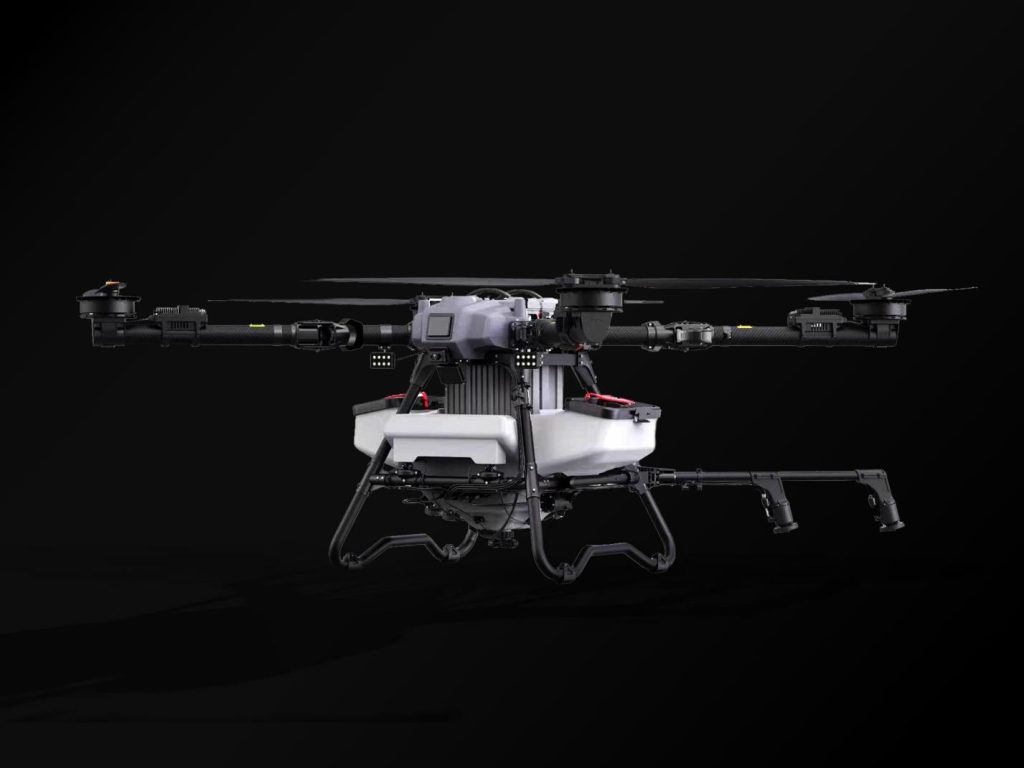
The P100S focuses on three things. It carries heavy loads. It navigates with centimeter-level RTK accuracy. It operates autonomously across large areas. These features are not new on their own. What matters is how they are combined into a stable platform.
The drone can generate crop models and apply inputs at variable rates. This reduces waste. It also improves input efficiency. These functions are already used in precision agriculture, but adoption has been uneven. One reason is complexity. Another is reliability.
GrainCore tries to solve both. The system is designed to run with minimal manual adjustment. That reduces the learning curve for operators. It also lowers the risk of human error.
In parallel, the AI-driven plant factory system addresses a different challenge. Indoor farming promises high yield and stability. But it often struggles with cost and operational consistency. GrainCore’s system uses environmental AI to manage climate and nutrient delivery in a continuous way.
This approach helps stabilize output. It also reduces the unpredictability that often limits indoor agriculture at scale. In recent industry coverage, controlled-environment agriculture has been under pressure due to high costs. Solutions that improve efficiency without adding complexity are gaining attention.
What connects these two hardware systems is the edge-AI architecture. It processes data locally and coordinates actions across environments. This is important because agriculture often operates in areas with limited connectivity. Cloud-only systems are not always reliable in such conditions.
By using edge computing, GrainCore ensures that decisions can be made in real time. This improves responsiveness. It also enhances system resilience.
From a technical standpoint, the company is not introducing entirely new concepts. Drones, AI, and edge computing are all established technologies. The value comes from how they are integrated and adapted to real agricultural conditions.
3. Capital, Timing, and the Shift in Investor Expectations
Technology alone does not define success in agtech. Timing and capital also matter. GrainCore’s launch comes at a moment when investor sentiment is changing.
According to the company, recent conversations with investors in the U.S. and Canada show a clear shift. There is less interest in speculative models. There is more focus on practical deployment and measurable impact.
This trend has been echoed in multiple recent industry reports. Over the past month, agtech funding discussions have emphasized profitability and scalability. Investors are asking simple questions. Can this system be deployed today? Can it generate value quickly? Can it scale without excessive cost?
GrainCore’s integrated approach aligns with these expectations. It presents a complete system rather than a single experimental product. This makes it easier for investors to evaluate real-world potential.
Another factor is geographic relevance. The U.S. agricultural market is large and diverse. It includes both massive outdoor farms and growing interest in indoor production. A system that can serve both segments has a clear advantage.
GrainCore positions itself as a bridge between these two worlds. This is not just a technical decision. It is a strategic one. It expands the addressable market. It also creates more opportunities for partnerships.
The company also emphasizes collaboration with agricultural partners worldwide. This is important for validation. Agtech solutions often fail when they are not tested in real conditions. Continuous feedback from farmers helps refine the system.
In the current funding environment, this kind of grounded development approach is more attractive than rapid but untested expansion. It shows discipline. It also reduces execution risk.
From a broader perspective, GrainCore’s momentum reflects a larger pattern. Agtech is entering a phase where integration, reliability, and usability matter more than hype. Companies that can deliver on these aspects are likely to stand out.
4. A Quiet but Clear Direction for the Future of Farming
GrainCore Dynamics’ launch at the Frontier Innovation Summit 2026 does not rely on bold promises or dramatic claims. Instead, it presents a clear and practical direction for agriculture.
The company focuses on integration. It connects outdoor and indoor farming into one system. It combines hardware and software in a way that reduces complexity. It emphasizes reliability over novelty. These choices reflect a deep understanding of how farming actually works.
The P100S drone improves efficiency in large-scale operations. The AI plant factory system stabilizes indoor production. The edge-AI architecture ties everything together. Each component solves a real problem. Together, they create a more coherent workflow.
At the same time, the company’s strategy aligns with current market conditions. Investors are looking for practical solutions. Farmers need tools that work without adding risk. GrainCore addresses both sides.
This is why the launch matters. It is not just about one company or one product. It shows where the industry is heading. Agtech is moving away from isolated innovations. It is moving toward systems that deliver consistent value in real environments.
In the end, the future of agriculture will not be defined by a single breakthrough. It will be shaped by how well different technologies work together. GrainCore’s ecosystem is an early example of that shift.
It is a quiet approach. But it is a strong one. And in agriculture, quiet reliability often matters more than anything else.
For more information, full hardware specifications, and to view the official launch reel, visit www.gcrdynamics.com.