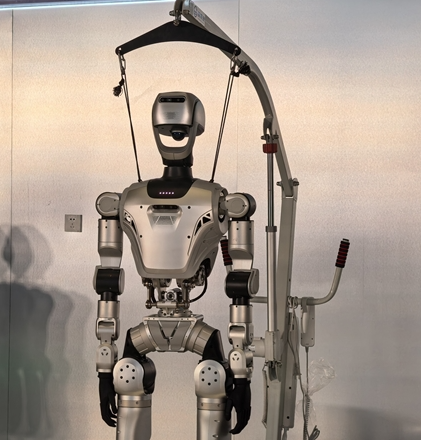





May 13, 2026 – Chinese robotics firm Unitree Robotics has officially unveiled its latest creation — the GD01, a full-scale piloted transforming mech that carries a starting price tag of 3.9 million yuan (approximately $540,000). Billed as the world’s first mass-produced human-carrying mech, the GD01 weighs around 500 kg when occupied and is designed to function as a next-generation civilian mobility platform capable of switching between dedicated form factors.
Demo footage released alongside the launch reveals a machine that defies conventional expectations. The GD01 demonstrates raw power sufficient to demolish an entire wall with a single punch, while its agility and force output far exceed what any typical passenger vehicle could ever deliver.
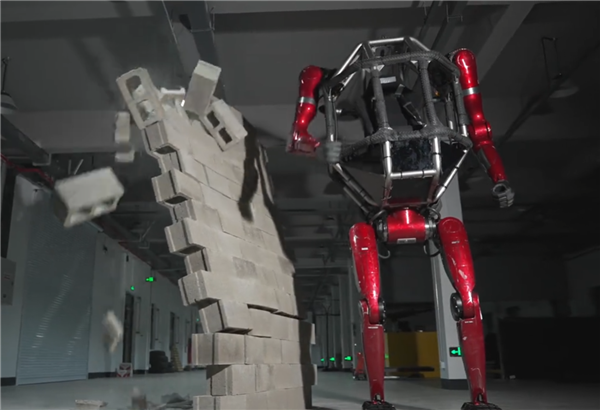
Unitree founder Wang Xingxing took to social media to gauge public reaction, posing a direct question to his followers: is this the kind of hardcore, science-fiction-turned-reality product that everyone has been waiting for?
An early-stage investor in the company shed light on Unitree’s broader strategy, noting that the firm has been steadily advancing along a carefully mapped technology roadmap. According to the investor, the true purpose of the mech goes beyond selling units — it serves as a high-visibility showcase designed to broadcast Unitree’s deep expertise in sensors, controllers, and core engineering capabilities to a global audience.
Legal experts have also weighed in on one of the most debated aspects of the GD01: whether it can actually be driven on public roads. Attorneys clarified that “civilian transportation” is a colloquial term rather than a formal legal classification. The real hurdle lies in product certification — current vehicle registration frameworks simply do not include a category that fits a transforming mech. As a result, the GD01 cannot currently be classified as a car, motorcycle, or any other existing type of motor vehicle, leaving its regulatory path entirely uncharted.