



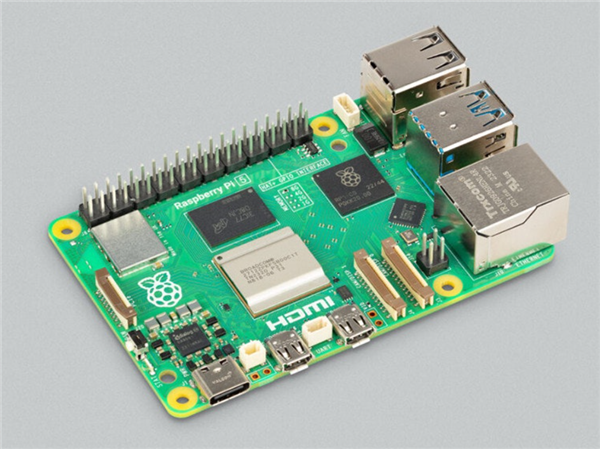
March 31, 2026 – Raspberry Pi Holdings, the UK-based manufacturer of compact and budget-friendly computers, has announced a remarkable 25% year-on-year increase in sales for 2025, despite the ongoing global shortage of memory chips. Strong demand for its products in the US and Chinese markets has managed to offset the adverse effects of this supply chain challenge.
The Cambridge-headquartered company revealed in a statement issued on Tuesday (local time) that its annual revenue climbed from 259.5millionin2024to323.2 million.
Eben Upton, the CEO of Raspberry Pi, stated that the company has successfully navigated the pressures brought about by rising chip prices. It was also disclosed that for the first time this year, the sales volume of its semiconductor products has surpassed that of complete computer systems.
Originally established as a foundation in 2008, Raspberry Pi aimed to address the gaps in computer science education in the UK. This miniature computer has a wide range of applications. Approximately 70% of its sales come from customers in the industrial and embedded application sectors, while a smaller number of enthusiasts use it for creative do-it-yourself projects.
On February 17, social media speculation that the widespread adoption of intelligent agents like OpenClaw could drive up demand for Raspberry Pi devices caused the company’s stock price to soar by 36% in a single day. However, the stock has since given up most of those gains, still showing a 37% decline over the past 12 months. It closed at 292.20 pence on Monday.
Like other consumer electronics manufacturers, Raspberry Pi is currently grappling with the persistent shortage of memory chips. The root cause of this shortage lies in the fact that builders of artificial intelligence data centers are paying premium prices and locking up chip supplies, leading to a sharp reduction in the availability of chips for the consumer electronics and automotive industries. Due to the chip shortage, Raspberry Pi has raised its product prices twice within four months.