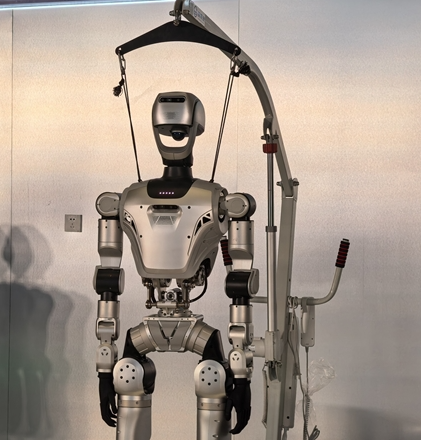




March 28, 2026 – JD Logistics has unveiled an upgraded version of its Yilang robotic arm, marking a significant leap from a single-arm to a dual-arm system that dramatically enhances warehouse package sorting efficiency.
The Yilang robotic arm is specifically engineered for package grasping and palletizing. By leveraging the embodied model of its advanced SuperBrain AI large model, JD Logistics stands as the sole enterprise in the industry to have successfully implemented embodied robots in real-world warehouse production operations. This achievement has overcome the global industry challenge of palletizing non-standardized packages.
This upgrade directly addresses key pain points in the logistics sorting sector, such as the diverse range of product categories, significant variations in package sizes, and high labor costs. Despite the stringent industrial-grade stability requirement of 99.99%, the Yilang has achieved multiple breakthroughs.
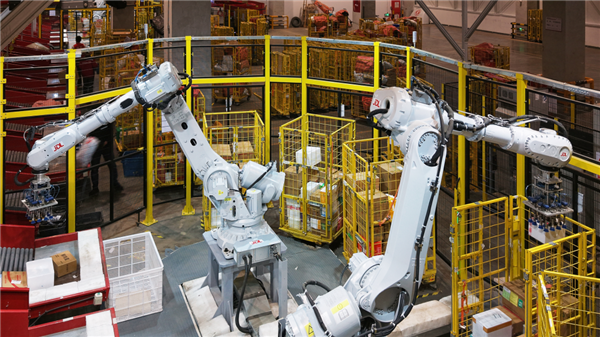
The footprint of the Yilang robotic arm has been reduced from 72 square meters to just 32 square meters, less than half of its original size. The dual-arm collaborative operation mode has significantly improved space utilization, with a loading rate reaching 69.1%, a 32% increase year-on-year, resulting in a dual boost in both capacity and efficiency.
Through the creation of a 1:1 digital twin scenario that blends virtual and real environments, the equipment undergoes tens of thousands of practical training sessions in a virtual setting before being deployed in real-world applications. This approach has slashed development costs to one-tenth of the traditional method.
By integrating multi-sensory information from vision, force, and touch, the robotic arm can perceive the material and posture of packages, enabling it to flexibly switch between suction, clamping, and a combined suction-clamping grasping method, thereby significantly reducing error rates.
The human-robot collaborative operation mode allows human workers to focus on command and control, while robots handle the physically demanding tasks. This has halved the cost of sorting each individual package compared to manual labor.
As of last year, the Yilang robotic arms have been operating around the clock in multiple JD Logistics parks across the country, handling over a million different types of products. Looking ahead, JD Logistics plans to deploy 1,000 Yilang robotic arms to facilitate the efficient circulation of hundreds of millions of packages.
In addition to the Yilang robotic arm, JD Logistics has also rolled out other robotic solutions on a global scale, including the Zhilang goods-to-person system, the Tianlang pallet-to-person system, the Dilang transport robots, the Dulang unmanned vehicles, and the Feilang drones. These robots are now in widespread use across dozens of countries worldwide.