



March 27, 2026 – Recently, Zhao Yongpo, CEO of Great Wall Motor’s WEY brand, shared his views on autonomous driving sensors in a video. He stated that “more LiDARs don’t necessarily mean a better experience; sometimes, simply piling on hardware is a shortcut.”
This opinion has sparked discussions, and in the afternoon of the same day, Lu Fang, CEO of VOYAH, took to Weibo to share his insights on the same topic. When asked by many friends about how to choose intelligent driving systems and which is safer between vision-based and multi-sensor perception approaches, Lu Fang offered two key perspectives:
Firstly, true safety lies in “accurate perception” rather than just “seeing.”
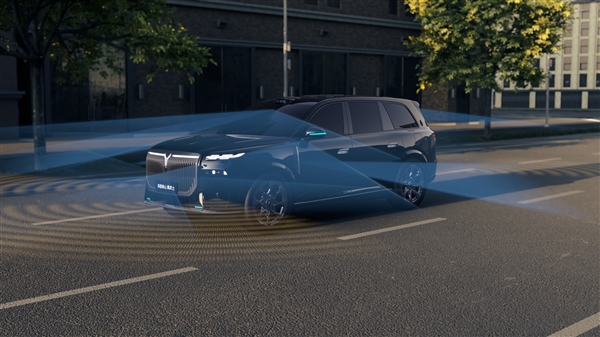
Drawing inspiration from modern warfare’s electronic countermeasures, Lu Fang noted that vision-based perception is “passive,” relying on external light conditions. It can be easily “blinded” by strong sunlight, darkness, or thick fog. In contrast, LiDAR is “active,” emitting its own light and measuring absolute physical distances regardless of lighting conditions.
While some argue that “if human eyes can drive, cameras can too,” they overlook the fact that human vision is supported by an evolved brain with millions of years of processing power. Current AI chips are still in their infancy compared to the human brain, he emphasized. “We cannot compromise user safety by relying solely on visual perception. Instead, we need the certainty of physical sensors. Only by combining cameras with LiDAR can we build a truly reliable perception system,” Lu Fang explained.
Secondly, user safety should not be left to algorithmic guesswork.
Lu Fang pointed out that pure vision-based solutions are not cost-free—they require massive computational power and chip stacks to compensate for inherent perceptual limitations. While hardware costs may converge between vision-only and multi-sensor approaches, the outcomes differ significantly. Algorithmic probability calculations can never replace the “truth” measured by LiDAR.
He acknowledged that even single or dual LiDAR setups have blind spots, whereas a quad-LiDAR configuration offers a 360-degree “god’s-eye view,” providing the ultimate safety guarantee for users.
“Adding more LiDARs does increase costs, but safety is not a cost-benefit equation—it’s a life-or-death decision,” Lu Fang concluded. “Quad-LiDAR represents the most responsible and optimal solution for user safety at this stage.”