
March 25, 2026 – In a recent interview, Robin Zeng, chairman of CATL, emphasized that the United States’ current lag behind China and Europe in electric vehicle (EV) adoption is merely a temporary setback. He firmly believes that the global trend toward electrification is unstoppable and that the U.S. will eventually fully embrace CATL’s battery technology due to its cost-effectiveness and technological edge.
Zeng highlighted that the U.S. lacks a large-scale workforce of electrochemical engineers like CATL’s team of over 21,000 professionals. This shortage, combined with the relatively weak foundation of the domestic battery industry, makes it difficult for the U.S. to achieve significant breakthroughs in key technologies independently.
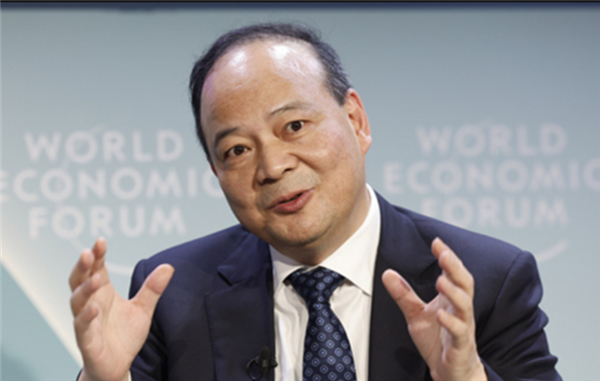
He also pointed out that talent and capital in the U.S. tend to flow into high-profit sectors such as chips, software, and artificial intelligence, leaving the battery industry undervalued and often perceived as a “dead-end” field. Despite these challenges and political hurdles, including so-called “national security” concerns, Zeng remains optimistic about the U.S. market.
According to Zeng, both American consumers and automakers need CATL. The company excels at controlling costs while delivering cutting-edge battery technology, making it indispensable for high-end electric vehicles. Without CATL’s support, he argued, the development of premium EVs in the U.S. would face significant obstacles.
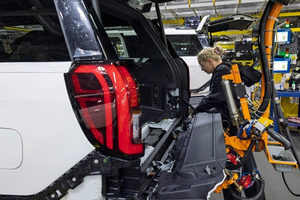
This optimism is supported by real-world examples. Despite hefty tariffs and strict market entry barriers imposed by the U.S., major automakers like Ford, General Motors (GM), and Tesla have forged deep partnerships with CATL. Ford has established a battery plant in the U.S. through patent licensing, GM is willing to pay 60% tariffs to import CATL’s batteries, and Tesla has adopted CATL’s technology for its energy storage projects.
Statistics show that one in every three EVs globally is powered by CATL batteries. Its flagship lithium iron phosphate (LFP) batteries offer cost savings of approximately 30% compared to traditional battery chemistries, giving CATL a substantial lead in economies of scale.
Looking ahead, Zeng predicted that U.S. market access restrictions could begin to ease by 2028, as commercial interests outweigh short-term political tensions. Meanwhile, CATL is already preparing for the future by developing sodium-ion batteries, which promise even lower costs and better performance in extreme cold conditions. Several Chinese automakers have already partnered with CATL in this area.
Although U.S. and South Korean battery manufacturers are striving to catch up in LFP technology, industry experts admit that it could take the U.S. at least a decade to develop comparable capabilities independently.