


January 15, 2026 – On January 13 local time, InsideEVs reported that General Motors (GM) once launched the Chevrolet Equinox Plus plug-in hybrid (PHEV) version in the Chinese market. This model seems to be a perfect fit for the U.S. market, with its well – known name, mainstream crossover SUV positioning, and a combination of fuel and electric drive. Under China’s testing standards, it boasts a combined range of over approximately 965 km. However, this vehicle will not make its way to the United States.
The reason doesn’t lie in the product itself but in GM’s long – term choice regarding its electrification route. In the U.S. market, GM deliberately avoids the hybrid and PHEV paths and focuses solely on full electrification.
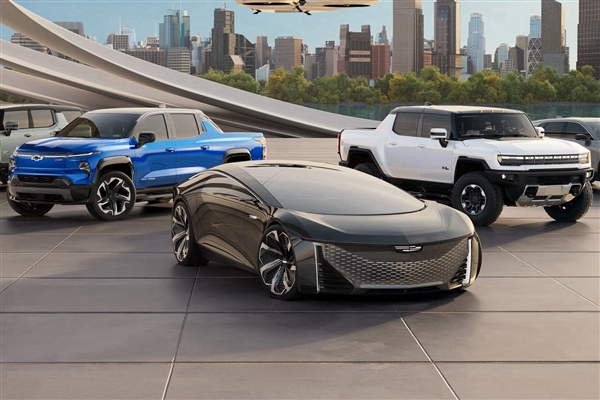
GM CEO Mary Barra refers to this direction as the “ultimate form” of the company. At the Automotive Press Association meeting in Detroit, Barra revealed the practical difficulties that PHEVs face in the U.S. She pointed out that most PHEV owners do not charge their vehicles, so GM has to be extremely cautious when making arrangements in the hybrid and PHEV fields.
The original design idea of PHEVs is to reduce fuel consumption and emissions through a certain proportion of pure – electric driving, but this is based on the premise that users are willing to charge frequently. In reality, many owners have not developed this usage habit.
Previous studies have also supported this point. In 2022, the International Council on Clean Transportation stated that the actual proportion of pure – electric driving in PHEVs is far lower than what regulatory agencies assume. As a result, the real fuel consumption is 42% to 67% higher than the official values marked by the U.S. Environmental Protection Agency (EPA) under its test conditions. This problem is particularly prominent in the European market, where PHEVs have significantly higher emissions than expected.
As electric vehicle sales in the U.S. slow down, some automakers regard PHEVs as a more stable electrification path in the short term. Hyundai, Toyota, Volvo, and Mazda have all made arrangements in this area. In the absence of tax incentives and stricter regulations, Stellantis recently decided to completely abandon the PHEV route in the U.S., even though the group previously had the best – selling PHEV product in the country.
Meanwhile, extended – range vehicles are starting to attract attention. These vehicles use large – capacity batteries as the core and then extend the range by using a fuel engine to generate electricity. The report also mentioned that if users are also unwilling to charge, the extended – range solution may follow in the footsteps of PHEVs.
Despite continuous doubts from the outside world, Barra still insists that GM’s strategy of bypassing hybrids and directly betting on pure – electric vehicles was not wrong. She emphasized that given the conditions and information at that time, GM would still make the same choice and will continue to use its capital cautiously.